-

Culturally Sensitive and Globally Inclusive Peer Reviewing
Read more: Culturally Sensitive and Globally Inclusive Peer ReviewingCheck out this self-guided virtual open access workshop on inclusive peer review is designed for you, new and experienced reviewers, to reflect on how we can improve…
-

Advancing an agenda for psychological assessment in South Africa
Read more: Advancing an agenda for psychological assessment in South AfricaPsychological assessment has always been a core part of psychology, but like all other subdisciplines, the applicability of psychological assessments has always been debated. Typically,…
-

Reframing Psychology careers
Read more: Reframing Psychology careersWe have, for far too long, allowed the profession to perpetuate a dangerously narrow narrative: that ‘real’ psychology happens only when you enter a professional…
-
Challenges and opportunities for psychological research in the Majority World
Read more: Challenges and opportunities for psychological research in the Majority WorldHow can psychology transform itself into an inclusive science Read More
ASRIA Thematic Areas
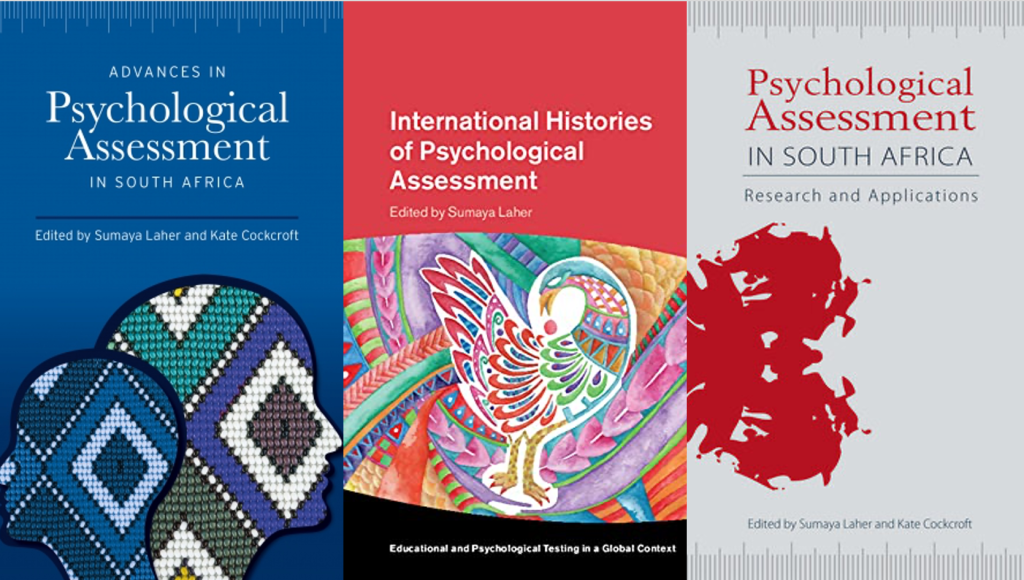
Download Psychological Assessment in SA
Laher, S. (2024). Advancing an agenda for psychological assessment in South Africa. South African Journal of Psychology, 54 (4), 515-530.doi:10.1177/00812463241268528
This project advances psychological assessment practice in South Africa through sustained scholarly leadership and international advocacy and is led by Professor Sumaya Laher.
The project promotes ethically sound, contextually valid, and globally aligned assessment practices that respond to the needs of diverse and historically underrepresented populations.
Impact is achieved through influential scholarly outputs, including two foundational assessment texts for South Africa as well as International Histories of Psychological Assessment which brought together experts from across 12 countries and was published in conjunction with the International Test Commission.
The African Journal of Psychological Assessment (AJOPA) was founded in this project in partnership with Psychological Society of South Africa (PsySSA) along with Assessment Standards South Africa – a joint collaboration between PsySSA, SIOPSa and ATP-SA.
Recent Research
Gama, B., Laher, S., & Alence, R. (2025, December 20). Exploring personality structure in South Africa: A text mining approach. https://doi.org/10.31234/osf.io/8bnyf_v1
Laher, S., & Cheung, F. M. (2025). The cultural perspective in personality and psychopathology assessment. In J. L. Mihura (Ed.), The Oxford handbook of personality and psychopathology assessment (2nd ed., pp. 93–118). Oxford University Press.
Thalmayer, A. G., Asatsa, S., Shino, E. N., Naudé, L., Laher, S., Hassem, T., Florence, M., Adonis, T.-A., Uugwanga, S. N., Rotzinger, J. S., Hofmann, D., Makunda, J., Botha, C., Murangi, A., & Shirima, C. M. (2024). Lifespan research in Kenya, Namibia, and South Africa: Cohort profile of the Africa long life study. Personality Science, 5. https://doi.org/10.1177/27000710241264492
This project focuses on advancing personality assessment in South Africa through rigorous empirical research and methodological innovation. Research examines the applicability and cultural relevance of established personality measures, including the NEO Personality Inventory–Revised (NEO-PI-R) and the Cross-Cultural Personality Assessment Inventory–2 (CPAI-2), within diverse South African contexts. The project also builds on Professor Laher’s previous collaboration with the South African Personality Inventory (SAPI)initiative and her current work on the Africa Long Life Study (ALLS) project, which investigates personality structure across African languages and cultural settings. An innovative component of the project involves the use of text mining and computational methods to explore personality structure, offering novel insights into how personality is expressed in local linguistic contexts.
Hofmann, D., Hopwood, C. J., Laher, S., Asatsa, S., Florence, M., Shino, E., … Thalmayer, A. G. (2025, January 10). The Structure of Psychopathology Among Young Adults in Kenya, Namibia, and South Africa. https://doi.org/10.31234/osf.io/cr4kv
Laher S, Bain K, Bemath N, de Andrade V, Hassem T. (2021) Undergraduate psychology student experiences during COVID-19: challenges encountered and lessons learnt. South African Journal of Psychology. 51(2):215-228. doi:10.1177/0081246321995095
Laher S. (2014).An overview of illness conceptualizations in African, Hindu, and Islamic traditions: towards cultural competence. South African Journal of Psychology. 2014;44(2):191-204. doi:10.1177/0081246314528149
This project focuses on integrating culture into mental health assessment to strengthen the relevance and effectiveness of psychological tools and interventions. ASRIA’s research examines how mental illness is conceptualised across African, Islamic, Judaic, and Hindu traditions, with particular attention to community beliefs about aetiology, distress, and help-seeking. By systematically assessing culturally grounded understandings of mental health, the project aims to inform more responsive and effective community-based mental health interventions. The work also includes a co-leading role in the mental health component of the Africa Long Life Study (ALLS) study, which investigates mental health and wellbeing longitudinally among emerging adults across Africa. Additional strands focus on student mental health during and after the COVID-19 pandemic, as well as the development and evaluation of online, open access depression screening tool for South Africa.
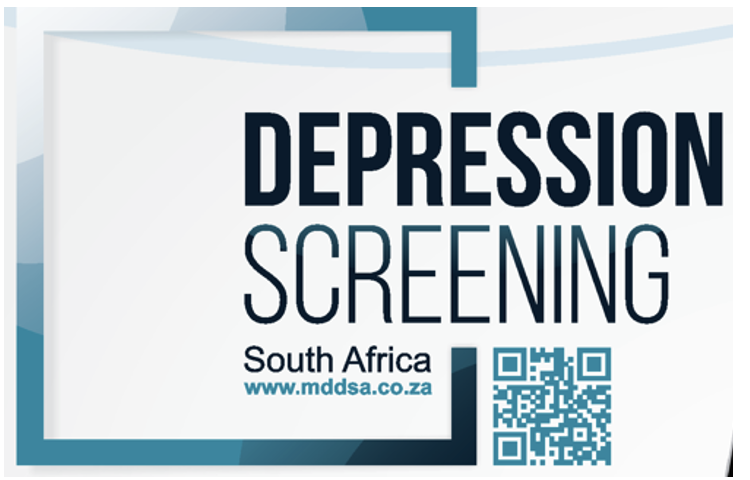
This project explores the role of technology in mental health and psychological assessment to expand access, improve engagement, and enhance contextual relevance. ASRIA’s work includes a co-investigator role in the development of MDDSA.co.za, an online, open-access mental health screening platform designed for use in South Africa. The project also examines ethical considerations in technology-based assessment, including fairness, accessibility, data protection, and contextual validity. Other research investigates gamification in assessment as well as the use of mental health apps.
Hassem, T. & Laher, S. (2026). Online screening of depression in South Africa. In S. Laher & K. Cockcroft (Ed’s.). Advances in Psychological Assessment in South Africa Wits University Press.
Hassem, T., Laher, S. & Cockcroft, K. (2026). Ethics, technology and assessment. In S. Laher & K. Cockcroft (Ed’s.). Advances in Psychological Assessment in South Africa. Wits University Press
Akoodie, Y., Laher, S., & Peral, S. (2025). Gamification and vocational assessments: A systematic review. African Journal of Career Development, 7(1), 9 pages. doi:https://doi.org/10.4102/ajcd.v7i1.167
Gama, B., Laher, S. Self-help: a Systematic Review of the Efficacy of Mental Health Apps for Low- and Middle-Income Communities. J. technol. behav. sci. 9, 428–439 (2024). https://doi.org/10.1007/s41347-023-00360-z
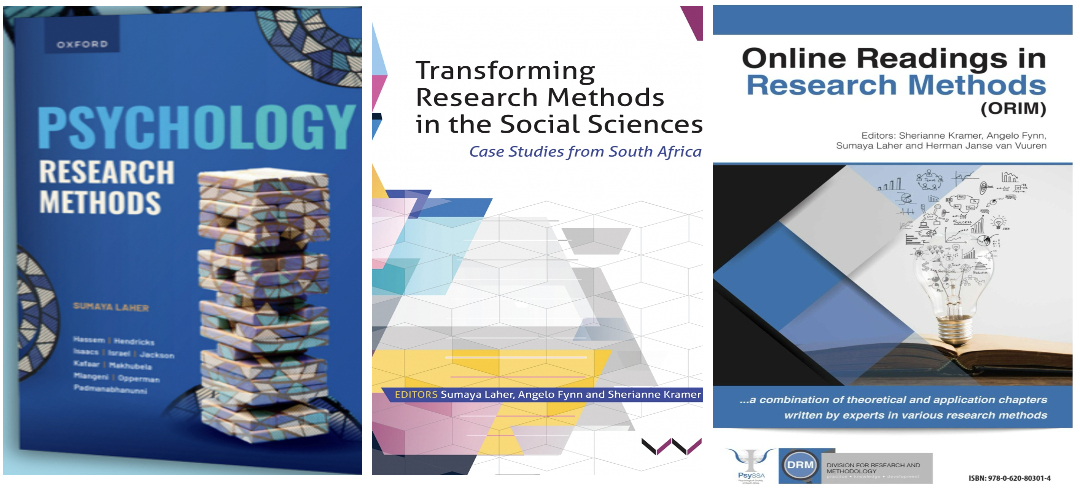
Download Transforming Methods Book
Download Online Readings in Research Methods (ORIM)
Laher, S. (2025). Using AI in academic writing: What’s allowed and what’s not? South African Journal of Psychology, 55, 155-158 doi:10.1177/00812463251338244
This project focuses on transforming research methods in psychology through sustained scholarly leadership, advocacy, and capacity building. It advances equitable, rigorous, and contextually responsive research practices across psychological and social research in Africa. Key activities include contributions to major scholarly works on research methods, thought leadership on ethical and responsible methodological innovation, including the use of artificial intelligence in academic research, and the promotion of high standards of research rigour.
The project is strengthened by international collaborations addressing methodological and epistemic challenges, supporting a more inclusive psychological science, and co-producing online training resources for inclusive peer review. Additional contributions include national engagement on research psychology training, scholarship on research quality and systematic reviews, the development of open-access teaching resources, leadership within professional associations, and active involvement in open science and scholarly publishing initiatives.
